Doune Castle is the day trip from Stirling that does not ask you to plan much. The 59 bus runs there, the walk from the village to the gate is short, and the castle is compact enough to see properly in an hour and a half. What makes it worth the ride is the double life of the place: a medieval great hall and gatehouse built on a scale that surprises people, and the setting for Winterfell, Castle Leoch and much of Monty Python and the Holy Grail. The village of Doune is the afternoon. Our Doune Castle page covers the sight itself; this is how to do the day.
Robert Stewart, the first Duke of Albany, acquired Doune in 1361 when he married Margaret Graham, Countess of Menteith. Albany was governor of Scotland and its effective ruler from 1386 to 1420, then Guardian after James I was captured by the English in 1406 — Historic Environment Scotland calls him “Scotland’s uncrowned king”, and the castle is his work. When his son Murdoch was executed in 1424, Doune passed to the Crown and settled into life as a royal retreat, which quietly ended in 1603 when James VI moved his court to London.
That history is the backdrop to what people actually know the place for. Doune stood in for Winterfell in the first series of Game of Thrones, for Castle Leoch in Outlander, and for several of the castles in Monty Python and the Holy Grail. The audio guide leans into all of it.
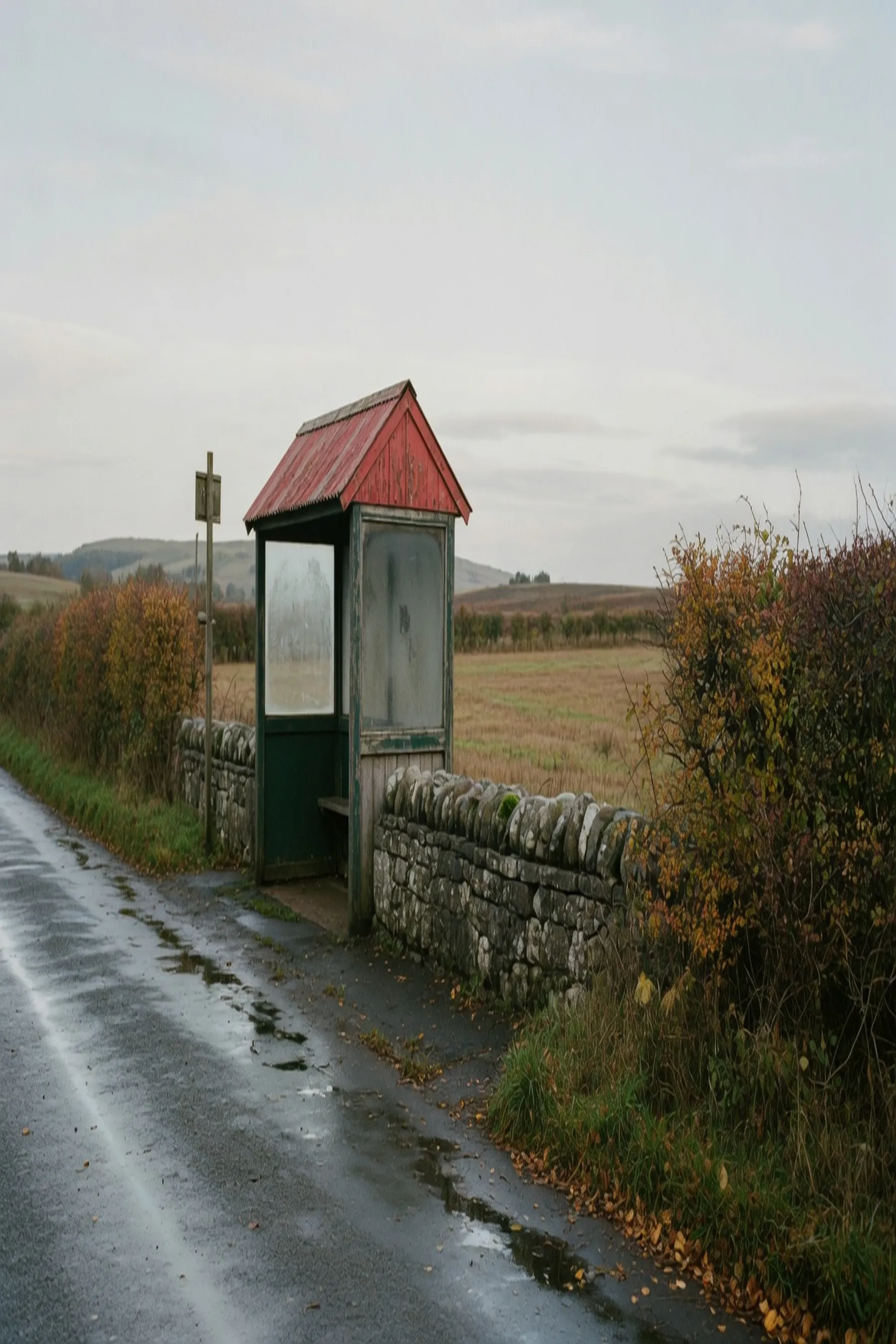
The bus is Midland Bluebird’s 59, Stirling to Callander, and it stops in Doune. Catch it at Stirling Bus Station, stance 7, and get off at Bank Street, Station Wynd or Fir Road. Bank Street is the stop for the castle: about a ten-minute walk, roughly half a mile. The service runs about every 30 minutes on weekdays and Saturdays, with a thinner Sunday service, and the first weekday departure from Stirling is around 7am. Times change, so read the live table on bustimes.org or the Midland Bluebird timetable rather than trusting a remembered one.
The castle sits about eight and a half miles from Stirling and four and a half from Dunblane, which matters if you are combining it with a morning elsewhere.
National Cycle Network Route 765 links Doune village to Dunblane, and the castle has eight cycle racks, so a bike is a workable way to arrive. Historic Environment Scotland runs the site and lists the route on its visit page. If you come by train to Dunblane and pedal the last stretch, you have joined the 59’s line from a different angle.
Driving to Doune means parking in the village, not at the gate. The on-site car park is very limited and runs on donations, with two accessible bays, first come first served. Minibuses up to sixteen seats must book ahead through [email protected] or [email protected]. No motorhomes, campervans, caravans or coaches — coaches drop off at the Balkerach Street bus stop instead.
The three village car parks are free: Castlehill (FK16 6BJ), Doune Ponds (FK16 6EH) and Draggie Burn Park & Stride (FK16 6QJ). HES recommends Draggie Burn, which is about a 20-minute walk to the castle; Castlehill is nearer the village centre. The castle’s address is Castle Hill, Doune FK16 6EA, and its phone number is 01786 841 742.
The site is open daily through the year, but the clock changes twice. From 1 April to 30 September it is 9.30am to 5.30pm, last entry 4.45pm. From 1 October to 31 March it is 10am to 4pm, last entry 3.15pm. It closes on 25 and 26 December and 1 and 2 January. If you are reading this near the end of September, note the switch to the shorter winter hours at the start of October. HES advises you to book online in advance to guarantee entry.
Adult tickets are £10 booked online, £11 at the door; concessions are £8 online and £9 walk-up, and children aged 7 to 15 pay £6 online or £6.50 on the day. HES members go free and a Young Scot card gets £1 entry. Family tickets and the Explorer Pass exist, and partner members of English Heritage, Cadw and Manx enter free or at a discount. Carers go free, up to two per transaction. All of these figures sit on the HES prices page and they move; check historicenvironment.scot for the day you go.
The discount worth knowing is GOOD25: 25% off adult, child and concession tickets when you book online and arrive car-free — by bus, train or bike — and show proof of travel at the gate. It is the castle’s own answer to the fact that most visitors arrive by car.
The audio guide is included in the ticket and runs on your own phone or tablet, which means it needs an internet connection. Signal on site can be patchy, so HES says to pre-load it using the link in the booking confirmation email before you arrive. Terry Jones narrates the history, and there is Outlander content from Sam Heughan, so the Python fan and the Outlander fan get the same device and a very different afternoon. It covers both the castle’s story and the film and television links.
The Great Hall is the room that stops people: a cathedral-like space with a minstrels’ gallery and a central hearth. The gatehouse keeps its iron yett and drawbar. The Duke’s Hall, restored in 1883 by the Earl of Moray, has a musicians’ gallery, a double fireplace and a carved oak screen. Down the kitchen tower, the lower levels may pre-date the fourteenth century.
The courtyard is grassed and uneven, and the stairs are part of the visit: 22 steps to the servery, 26 to the kitchen, and spiral stairs to the second floor. Then there is the puzzle HES calls the “missing ranges” — projecting tusks and windows in the south wall suggest that south and west ranges were planned but never finished, or built and later demolished. Nobody is quite sure, and the site is happy to say so.
Facilities are a shop, a picnic area, toilets including accessible ones, self-service tea and coffee, and baby changing. No visitor dogs — assistance dogs only.
The village is worth an hour after the castle. At The Cross, where Main, George and Balkerach Streets meet, stands the Mercat Cross from about 1620: a Category A listed monument with a six-step base, an octagonal shaft, the Moray arms and sundials. The Doune & Deanston Heritage Trail runs through the village, and the Information & Heritage Centre — free to enter — keeps the Doune Pistols made by Thomas Cadell from 1646. Sweetie Lane, off Graham Street, was the birthplace of Alexander Ferguson, the man behind Edinburgh Rock.
For food, ask locally rather than trusting a directory: the Buttercup Cafe welcomes dogs, and The Woodside and the Pond Cafe are the names people mention. The Co-op and Spar are on Main Street if you want supplies for the bus home. Our Doune village page has more on the village itself.
If the legs are fresh, the castle-and-river loop along the River Teith is about a mile and three-quarters and roughly an hour. It joins the castle to the water and back through Doune, and it is the obvious way to turn a castle visit into a walk.
Nothing specific to Doune Castle is confirmed on the Historic Environment Scotland what’s-on list as of 26 September 2026, so treat the castle itself as the event. The multi-venue Big Living History Week runs 10 to 18 October 2026, but Doune is not named among the venues shown. A family trail called the Mythical Mystery Hunt ran at the castle in the October half-term of 2025; a 2026 version may return but has not been confirmed, so check the HES what’s-on page rather than assuming dates.
The other autumn and winter event is Deanston Dramfest at Deanston Distillery, just outside Doune: an annual December whisky festival, usually the first weekend of the month, with paid tastings and a free community winter event. The 2026 dates were not published when this was written — check deanstonmalt.com.
Catch the 59 from Stirling Bus Station, stance 7, in the morning and get off at Bank Street. Walk the half mile to the gate, collect the pre-loaded audio guide, and give the castle an hour and a half — the Great Hall, the gatehouse and the missing-ranges puzzle need that long. Then walk back into Doune for the Mercat Cross and the heritage centre, and lunch at whichever of the cafes is open. The 59 home from one of the village stops rounds it out.
If you are driving instead, park at Draggie Burn and walk the 20 minutes in; the castle’s own car park is not the plan. Our day trips from Stirling page is the wider menu. The castle closes early from 1 October, so in the winter months, go in the morning.